So, you’ve come across the term “Rectangular Parallelepiped” and you’re wondering what it’s all about, right? Well, let’s dive in and explore this three-dimensional figure that seems like an elongated cube or a box.
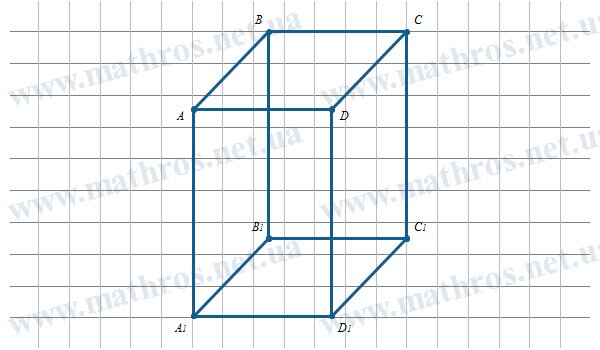
A rectangular parallelepiped has volume and surface area that we can calculate using specific formulas. Sounds interesting? Let’s break it down!
Rectangular Parallelepiped: The Basics
A rectangular parallelepiped is a 3D shape with six faces, twelve edges, and eight vertices. You might have also heard it called a cuboid because it shares some similarities with a cube. The key difference? While a cube’s faces are all squares, the faces of a rectangular parallelepiped are rectangles.

So, how can you spot one? Look for a shape where each face meets four other faces at right angles. And if you peek at the vertices, you’ll see that each one is where three edges and three faces intersect.
Types of Rectangular Parallelepiped: Which Is Which?
Did you know there are two types of rectangular parallelepipeds? Let’s break it down:
- Regular Rectangular Parallelepiped: Here, all the faces are perpendicular to the bases. So, every side face is a rectangle.
- Oblique Rectangular Parallelepiped: In this case, the faces aren’t perpendicular to the bases. Instead, they form parallelograms.
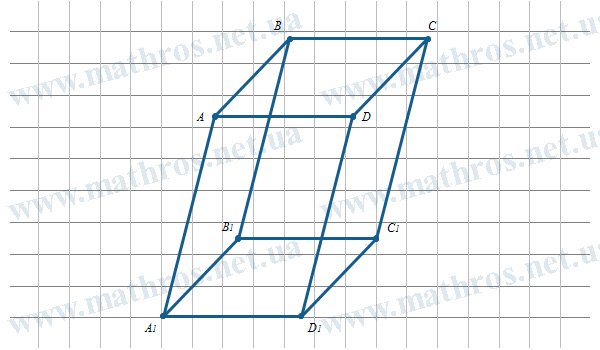
When people talk about a rectangular parallelepiped without any specifics, they’re usually referring to the regular kind.
Properties of a Rectangular Parallelepiped: What to Look For
Recognizing a rectangular parallelepiped is easy once you know its key properties:
- It has six faces, eight vertices, and twelve edges;
- In a regular rectangular parallelepiped, all faces are rectangles. In an oblique one, the faces are parallelograms;
- It has three dimensions: length, width, and height;
- Opposite faces are equal.
Formulas for a Rectangular Parallelepiped: The Math You Need
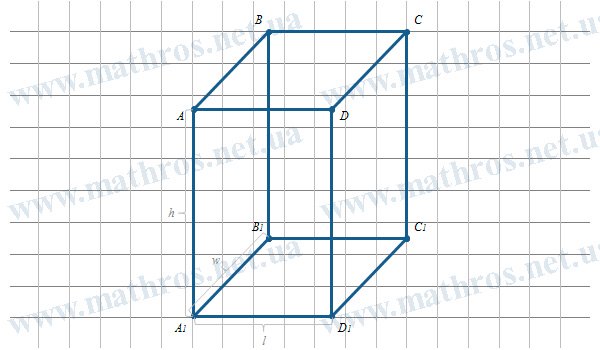
Want to calculate something about a rectangular parallelepiped? Here are the essential formulas:
| Term | Definition | Formula |
|---|---|---|
| Total surface area of a rectangular parallelepiped | This is the area occupied by its surface. The surface area is the sum of the areas of all six rectangular faces of the parallelepiped |  |
| The volume of a rectangular parallelepiped | This is the space it occupies in a three-dimensional space. The volume of a rectangular parallelepiped is calculated by multiplying its length, width and height |  |
Example Problems: Putting Theory into Practice
Let’s test what we’ve learned with some examples.
Example 1: What is a rectangular parallelepiped?
A rectangular parallelepiped is a three-dimensional figure with six rectangular faces, eight vertices, and twelve edges. Opposite faces are congruent.
Example 2: What is the difference between a cube and a rectangular parallelepiped?
A cube has six equal square faces, while a rectangular parallelepiped has six rectangular faces. In a rectangular parallelepiped, opposite faces are the same.
Example 3: What is the ratio of angles to faces in a rectangular parallelepiped?
A rectangular parallelepiped has eight vertices (corners) and six faces. The ratio is 8:6 or 4:3.
Example 4: A rectangular parallelepiped is 5 cm long, 4 cm wide, and 4 cm high. What is its surface area?
Alright, let’s break it down. We know:
- Length (l) = 5 cm;
- Width (w) = 4 cm;
- Height (h) = 4 cm.
Now, how do we find the surface area? We use this formula: TSA=2⋅(l⋅w+l⋅h+h⋅w). Plugging in our values, we get:

So, the surface area of this rectangular parallelepiped is 112 square centimeters.
Example 5: a rectangular parallelepiped has a length of 7 cm, a width of 6 cm and a height of 8 cm. What is the volume of the parallelepiped?
Alright, let’s figure this out together. We’ve got a rectangular parallelepiped with:
- Length (l) = 7 cm;
- Width (w) = 6 cm;
- Height (h) = 8 cm.
How do we find the volume? Easy! We use the volume formula for a rectangular parallelepiped. Plugging in our numbers, we get:

So, the volume of this rectangular parallelepiped is 336 cubic centimeters.
Example 6: Find the area of the faces of the rectangular parallelepiped ABCDA1B1C1D1, the sides of which are equal to 3 cm, 5 cm and 7 cm
Alright, let’s figure this out. We know that the sides of our rectangular parallelepiped are 3 cm, 5 cm, and 7 cm. How do we find the areas of its faces?
First, remember that opposite faces of a rectangular parallelepiped are equal. So, we have:
- AA1B1B = DD1C1C;
- ABCD = A1B1C1D1;
- AA1D1D = BB1C1C.
Since the faces are rectangles, we can use the formula for the area of a rectangle: Area=length⋅width. Let’s calculate each pair of faces:

So, the areas of the faces AA1B1B and DD1C1C are 15 square centimeters, the areas of the faces ABCD and A1B1C1D1 are 35 square centimeters, and the areas of the faces AA1D1D and BB1C1C are 21 square centimeters.
Example 7: Find the angle DBD1 of the rectangular parallelepiped ABCDA1B1C1D1, for which AB = 4 cm, AD = 3 cm and AA1 = 5 cm. Give the answer in degrees

Alright, let’s tackle this together. We need to find the angle DBD1 of our rectangular parallelepiped, given the sides AB = 4 cm, AD = 3 cm, and AA1 = 5 cm. How do we do this?
First, consider the right triangle ABD. According to the Pythagorean theorem, we can find BD:

Next, look at the right triangle BDD1. Notice that BD equals AA1, which also equals DD1. This means triangle BDD1 is isosceles. In an isosceles triangle, the angles at the base are equal.
So, what’s the required angle? Since BDD1 is isosceles and a right triangle, the base angles must be 45° each.
Therefore, the angle DBD1 is 45°.
Deeper Dive: Additional Aspects of Rectangular Parallelepiped
Want to explore more about a rectangular parallelepiped? Here are some interesting topics:
- Diagonals of a Rectangular Parallelepiped – Formulas and examples to help you calculate the diagonals.
- Surface Area of a Rectangular Parallelepiped – More formulas and examples for surface area calculations.
- Volume of a Rectangular Parallelepiped – Learn more about volume calculations with detailed examples.