Subtracting fractions is a fundamental operation in mathematics that shows up not only in straightforward problems but also in more advanced algebraic calculations. Understanding how to subtract fractions correctly is essential because even a small mistake can lead to incorrect results in later steps. That’s why it’s important to focus on two main scenarios: subtracting fractions with like denominators and subtracting fractions with unlike denominators. Let’s explore both step-by-step so you can confidently solve these problems.
Subtracting Fractions with Like Denominators: It’s Simple!
When the denominators are the same, subtraction becomes much easier. Imagine this: the denominator stays the same, and all you do is subtract the numerators. For example, consider the fractions 2/(x+5) and 3/(x+5). Since both have the denominator x+5, you just subtract the numerators: 2-3=-1, while the denominator remains unchanged.
Here’s the process in simple steps:
- Keep the common denominator as is, since both fractions share it.
- Subtract the numerators carefully, paying attention to the signs and like terms.
- Simplify the resulting fraction if possible.
Isn’t that straightforward? This method allows you to handle even more complex algebraic fractions with like denominators easily, since the main work is done by subtracting the numerators.
Subtracting Fractions with Unlike Denominators: Slightly More Complex but Totally Manageable
What happens if the denominators are different? This case is a bit more involved because you can’t subtract the numerators directly. For example, subtracting 1/(x-2) and 4/(x+3) requires some additional steps.
To correctly subtract fractions with unlike denominators, follow these steps:
- Find the least common denominator (LCD).
- Convert each fraction to have this common denominator by multiplying the numerator by the appropriate expression (LCD divided by the original denominator).
- Rewrite the fractions under the common denominator and subtract the numerators.
- Simplify the resulting expression if possible.
This clear, step-by-step approach helps you avoid errors and makes the subtraction process logical and manageable. Ready to try it out?
Reinforcing Your Skills: Let’s Work Through Some Examples
Now it’s time to apply what you’ve learned. Let’s examine how to subtract algebraic fractions in various situations. Step by step, we’ll put the rules into practice. This hands-on approach will deepen your understanding and build your confidence in tackling even more challenging problems.
Example 1: Subtract the Fractions and Simplify the Result

Since the denominators are the same, combine the fractions under the common denominator:

Next, combine like terms in the numerator:
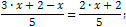
This expression cannot be simplified further, so this is final answer.
Example 2: Find the Difference Between the Following Fractions

Since denominators differ, find the least common denominator: (x-1)⋅(x+3). Convert both fractions:

Expand the numerators:

This fraction cannot be simplified further, so this is the final result.
Example 3: Perform the Subtraction of Fractions
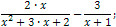
Note that the denominator of the first fraction factors as: x2+3⋅x+2=(x+1)⋅(x+2). The least common denominator is (x+1)⋅(x+2). Convert the second fraction accordingly:

Subtract under the common denominator:

This fraction cannot be simplified further, so this is answer.
Want to Explore More? Useful Topics for Your Next Steps
Subtracting algebraic fractions is just one part of a broad and fascinating area involving rational expressions. The more you practice and explore different operations with fractions, the more comfortable you’ll become with a variety of problems. If you want to expand your skills or try new challenges, check out these topics:
- Adding Algebraic Fractions: Examples and Solutions – Learn how to add fractions with both like and unlike denominators, with clear examples.
- Multiplying Algebraic Fractions: Examples and Solutions – Master multiplication rules, discover how to simplify, and avoid common errors.
- Dividing Algebraic Fractions: Examples and Solutions – Understand division of fractions, how to invert the second fraction, and practice typical problems.
Pick the topic that interests you most or seems most useful, and don’t hesitate to explore math from different perspectives. The deeper your understanding, the easier complex problems will become.
And if you feel confident with theory but want to double-check your calculations, try using an online fraction calculator. It’s a quick and reliable way to verify your answers and boost your confidence!
From Manual Calculations to Coding: Take a Step into Programming
If you can confidently subtract fractions by hand, why not take the next step and create your own application? It’s easier than it seems! The flowchart below outlines a clear algorithm to help you turn mathematical rules into programming logic. This not only reinforces your knowledge but also opens the door to the exciting world of programming, where math comes alive through tools you build yourself.
