Understanding even and odd functions is key to analyzing the symmetry of a function’s graph and its overall behavior. These properties play an important role not only in mathematics but also in solving many real-world problems. So, how can you determine if a function is even, odd, or neither? Let’s dive in and explore this concept step by step.
Even Functions: Symmetry About the Y-Axis
An even function is one whose graph is symmetric about the y-axis. Imagine placing a mirror along the y-axis. If one side of the graph is the exact reflection of the other, the function is even.
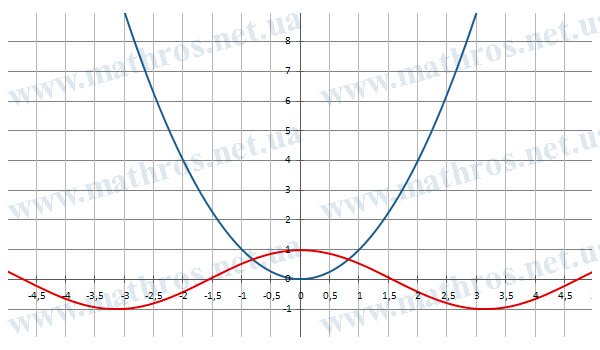
Mathematically, a function is even if it satisfies this condition:

What does this mean? If substituting -x into the function gives the same result as x, the function is even. For example:
- f(x)=x2: This is even because f(-x)=(-x)2=x2;
- f(x)=cos(x): This is also even, as f(-x)=cos(-x)=cos(x).
The graphs of even functions always exhibit symmetry about the y-axis.
Odd Functions: Symmetry About the Origin
Odd functions display a different type of symmetry—around the origin. Picture rotating the graph 180° about the origin. If the graph looks the same after the rotation, the function is odd.
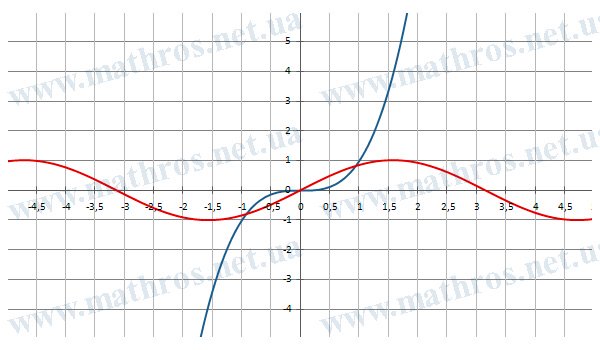
The mathematical condition for an odd function is:

This means substituting -x into the function flips the sign of the result. Examples of odd functions include:
- f(x)=x3: This is odd because f(-x)=(-x)3=-x3;
- f(x)=sin(x): This is also odd, as f(-x)=sin(-x)=-sin(x).
The graphs of odd functions are symmetric about the origin.
How to Check Even and Odd Functions: A Simple Algorithm
To determine if a function is even, odd, or neither, check the conditions:
- f(-x)=f(x): The function is even;
- f(-x)=-f(x): The function is odd.
If neither condition is satisfied, the function is neither even nor odd. For example, consider f(x)=x2+x:

This is neither equal to f(x) nor -f(x), so the function is neither even nor odd.
Why Is This Important?
You might wonder, why does it matter if a function is even or odd? The answer is simple: understanding these properties makes graph analysis and problem-solving easier. For instance:
- For even functions, you only need to analyze one side of the y-axis because the other side is symmetric;
- For odd functions, studying one half of the graph is enough since the other half is a mirrored reflection with a sign change.
These properties are also widely used in physics, engineering, and programming.
Practice: Even and Odd Functions in Action
The best way to grasp these concepts is through practice! Let’s work through five examples to identify whether the given functions are even, odd, or neither.
Example 1: Is f(x)=x4 Even or Odd?
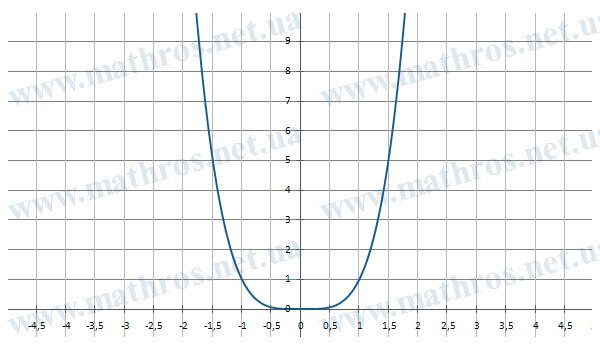
Start by testing the condition for evenness: f(-x)=(-x)4=x4. This equals f(x), so the function is even. Its graph is symmetric about the y-axis.
Example 2: Is f(x)=x3+x Even, Odd, or Neither?
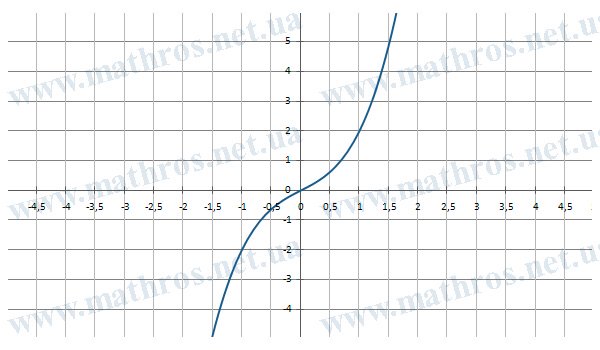
Check both conditions:
- For evenness: f(-x)=(-x)3+(-x)=-x3-x≠f(x);
- For oddness: f(-x)=-x3-x=-(x3+x)=-f(x).
The function is odd. Its graph is symmetric about the origin.
Example 3: Is f(x)=x2+2⋅x Even, Odd, or Neither?
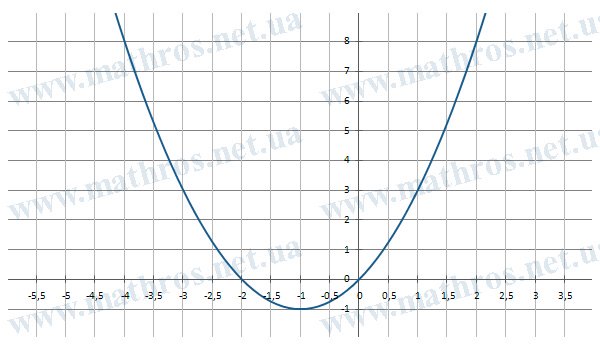
Testing the conditions:
- For evenness: f(-x)=(-x)2+2⋅(-x)=x2-2⋅x≠f(x);
- For oddness: f(-x)=x2-2⋅x≠f(x).
The function is neither even nor odd, and its graph has no symmetry.
Example 4: Is f(x)=sin(x)+cos(x) Even, Odd, or Neither?
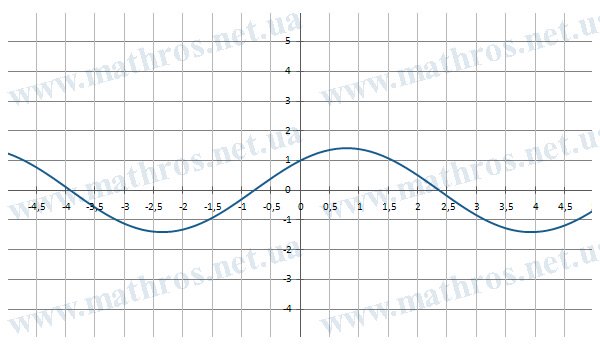
Let’s test:
- For evenness: f(-x)=sin(-x)+cos(-x)=-sin(x)+cos(x)≠f(x);
- For oddness: f(-x)=-sin(x)+cos(x)≠-(sin(x)+cos(x))=-f(x).
The function is neither even nor odd.
Example 5: Is f(x)=x5-x3+x Even, Odd, or Neither?
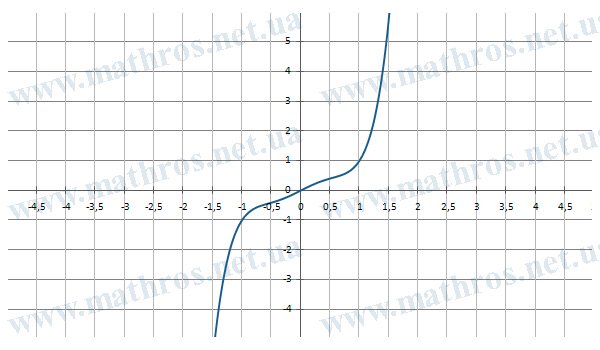
Testing the conditions:
- For evenness: f(-x)=(-x)5-(-x)3+(-x)=-x5+x3-x≠f(x);
- For oddness: f(-x)=-x5+x3-x=-(x5-x3+x)=-f(x).
The function is odd. Its graph is symmetric about the origin.
Beyond the Basics: Related Concepts
Understanding even and odd functions opens the door to exploring other important properties. Let’s briefly touch on some concepts that complement this knowledge:
- Monotonicity – Describes whether a function is increasing, decreasing, or constant over certain intervals.
- Continuity – Indicates whether the graph of a function can be drawn without lifting your pen, which is crucial for analysis and applications.
- Points of Discontinuity – Identifies where a function fails to be continuous, helping to classify these interruptions.