Calculating the perimeter of a rhombus involves adding the lengths of all its sides. Sounds straightforward, doesn’t it? Yet, there’s more to it. A rhombus is a unique quadrilateral whose sides are always equal in length, although its angles might not be right angles. Interestingly, a square is a special kind of rhombus—meaning all formulas covered here apply perfectly to squares as well.
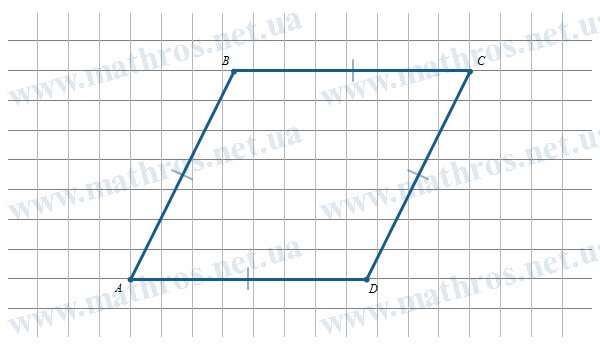
In this guide, you’ll discover two main ways to quickly find the perimeter of a rhombus, backed by clear formulas and practical examples to ensure you’re confident when tackling geometry problems.
Perimeter of a Rhombus Using Its Side: Simplest Method
Let’s start with the easiest method. The perimeter is simply the sum of all sides. For rhombus ABCD, that means:

However, since all four sides of a rhombus are identical in length, adding each separately isn’t necessary. We can simplify it:

This formula is intuitive, easy to remember, and perfect for quick calculations. Always remember, perimeter measurements are given in standard length units like centimeters (cm), meters (m), or millimeters (mm).
Perimeter of a Rhombus Using Diagonals: Another Helpful Formula
Another effective way to determine the perimeter of a rhombus is through its diagonals. Rhombuses have a unique property: their diagonals intersect at right angles and bisect each other.
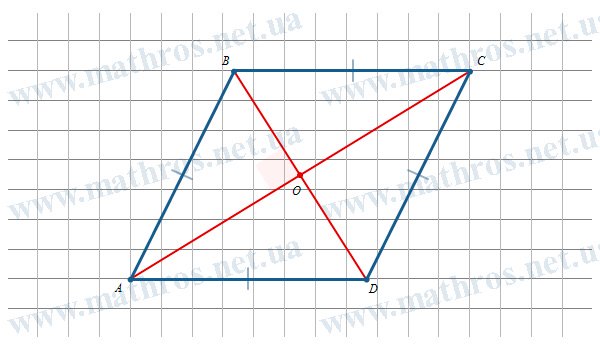
Consider rhombus ABCD with diagonals AC and BD crossing at point O. Notice that triangle ABO is a right-angled triangle. We can thus apply the Pythagorean theorem:

Substituting this into our perimeter formula gives us:

The simplified formula for calculating the perimeter of a rhombus using diagonals is thus:

This method is particularly useful when side lengths aren’t provided but diagonal lengths are known.
General Formulas: If we represent side AB as a, and diagonals as d1 (AC) and d2 (BD), the formulas become universally applicable:

Solving Problems: Practical Application of a Formulas
Now, let’s apply these formulas through simple examples to solidify your understanding and easily calculate the perimeter of a rhombus in various situations.
Example 1: Find the Perimeter of a Rhombus with Sides of 7 cm
Given that the sides of the rhombus are 7 cm, we use the perimeter formula with the given value:

Thus, the perimeter of a rhombus is 28 cm.
Example 2: What’s the Perimeter of a Rhombus with Sides of 12 cm?
In this case, the rhombus sides are 12 cm. Replacing a in the formula gives us:

Therefore, the perimeter of a rhombus is 48 cm.
Example 3: If the Rhombus Sides Are 15 cm, What’s Its Perimeter?
Just like previous examples, we’ll calculate the perimeter as follows:

Hence, the perimeter of a rhombus is 60 cm.
Example 4: The Perimeter of a Rhombus is 36 cm. What’s the Length of Its Side?
This time we have the perimeter (36 cm), and we need to find the side length. Using the familiar formula, we’ll solve a simple equation:

Thus, the side length of a rhombus is 9 cm.
Example 5: Find the Perimeter of a Rhombus with Diagonals 8 cm and 6 cm Respectively
Now we’ll apply the diagonal-based formula. Given diagonals d1=8 cm and d2=6 cm, we substitute these values into our formula:

Thus, the perimeter of a rhombus is 20 cm.
What’s Next? Explore Further Geometry Resources
Having mastered finding the perimeter of a rhombus, you may want to dive deeper. A rhombus has fascinating properties involving angles, diagonals, and area, making it a cornerstone of geometry. For further understanding and practice, we recommend these helpful resources:
- What is a Rhombus – Comprehensive guide about the rhombus, including its properties and key geometric formulas with clear explanations and examples.
- How to Calculate Rhombus Diagonals – Detailed explanations on calculating the diagonals of a rhombus, offering straightforward methods and step-by-step guidance.
- Area of a Rhombus – Clear instructions on calculating the area of a rhombus, complete with practical examples to simplify complex concepts.
By exploring these topics further, you’ll gain deeper insights into geometry and enhance your problem-solving skills. Keep practicing, and geometry will soon feel effortless!
Coding Challenge: Automate Perimeter Calculation with a Flowchart
Interested in coding? Why not write your own program to automate finding the perimeter of a rhombus? It’s practical and fun! Below is a handy flowchart showing each logical step clearly. Choose your favorite programming language, follow the flowchart, and you’ll quickly build your own tool for solving geometry problems automatically. Happy coding!